Command the Road in a New Ford Expedition in Eau Claire, WI


Frequently Asked Questions about the New Ford Expedition Eau Claire, WI
How many passengers does the Ford Expedition seat?
The Expedition seats up to 8 passengers across three rows, with the total depending on whether you choose second-row captain's chairs (7 seats) or a bench (8 seats). The second row is generous enough for three adults across in bench configuration, and unlike most three-row crossovers, the third row has enough headroom and legroom to seat adults comfortably for extended trips — not just children on short drives. The MAX wheelbase version extends third-row dimensions further, making it the more natural choice for families who regularly fill all three rows on longer hauls.
What is the Ford Expedition's towing capacity?
Properly equipped, the Expedition tows up to 9,300 lbs — a rating backed by the body-on-frame platform it shares with the F-150 rather than the unibody construction that caps most three-row crossovers well below that figure. In practical terms, that covers a 26-foot pontoon with trailer, a two-horse loaded trailer, a large camper, or a tandem axle utility trailer without pushing the vehicle to its structural limits. Available Pro Trailer Backup Assist and an integrated trailer brake controller make the actual towing experience more manageable for drivers who don't pull a trailer every week.
What's the difference between the Ford Expedition and the Expedition MAX?
The Expedition MAX uses a longer wheelbase and extended body that adds meaningful cargo space behind the third row — resolving the main practical tension of the standard Expedition for buyers who routinely use all three rows and also need to carry gear. In the standard wheelbase, cargo space behind the third row is limited to a shallow load floor; the MAX expands that area substantially so a full passenger load and a full luggage load aren't an either/or decision. The MAX is available across most trim levels, so choosing the longer wheelbase doesn't constrain your trim options.
Does the Ford Expedition have a third row that adults can sit in comfortably?
Yes — and that's one of the clearest functional differences between the Expedition and most three-row crossovers in the market. The full-size platform gives the Expedition a taller interior and longer wheelbase than compact and mid-size three-row SUVs, which typically have a third row designed around children rather than adults. Getting into the Expedition's third row doesn't require an apology to whoever's sitting there, and adults can make it through a road trip to the Dells or a drive up north without arriving stiff and irritated. The MAX wheelbase extends that third-row comfort further if it's a primary consideration.
What makes the Ford Expedition Timberline different from other Expedition trims?
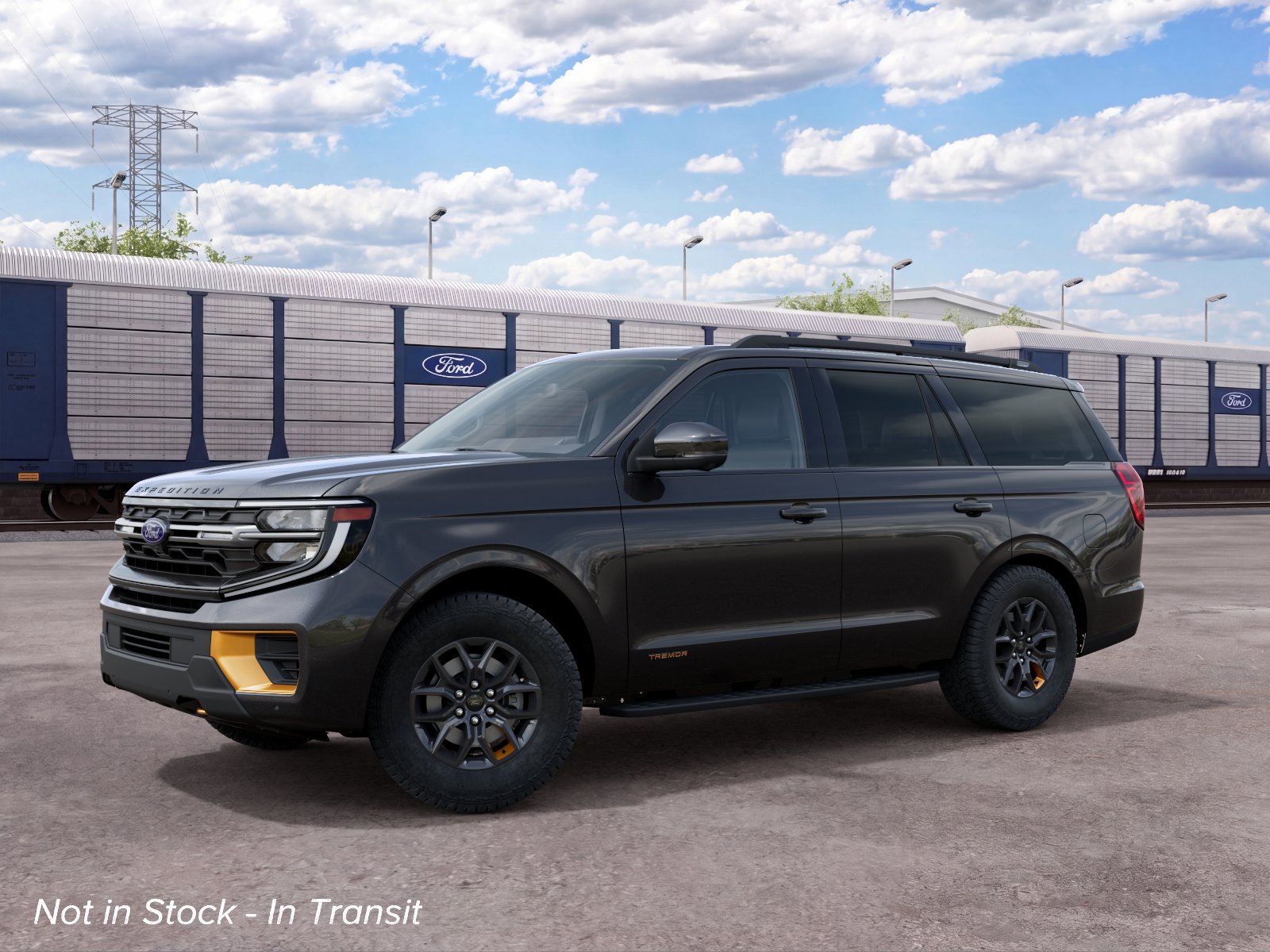
The Timberline is the Expedition's trail-capable variant, built for buyers who want full-size family hauling capacity with genuine off-road hardware behind it. It rides on a raised suspension with all-terrain tires, carries skid plate protection for the undercarriage, and includes trail-specific equipment the standard trims don't carry. The Timberline isn't engineered for rock crawling — it's built to get a full family load to a remote campsite, a back-country trailhead, or a hunt camp on forest service roads that would turn back a standard full-size SUV.
Have Additional Questions?
Sorting out whether the standard Expedition or the MAX wheelbase fits your situation — or which trim matches your priorities — is easier in person than on a spec sheet. Contact Eau Claire Ford and we'll make sure the right configuration is on the lot and ready to look at before you make the drive.
Specific questions about towing ratings, third-row dimensions, or how the Expedition stacks up against another full-size SUV you're considering? We'll give you honest answers grounded in what you're actually trying to do with the vehicle.
Financing a full-size SUV involves different considerations than a compact — loan amount, term length, and available incentives all factor in differently. Our finance team can model the numbers clearly before anything gets signed.
What Separates a Full-Size SUV from Everything Else
Size in a vehicle category isn't just a dimension — it's an engineering category that determines what the vehicle can carry, tow, and accommodate in ways that mid-size and compact SUVs can't replicate regardless of how well they're specced. The Expedition is built on a body-on-frame platform shared with the F-150, bringing truck-level structural strength to family hauling. That foundation supports towing ratings and interior volumes that unibody crossovers are architecturally incapable of matching, and the difference becomes concrete the moment you try to do something a crossover genuinely can't.
The practical gap shows up in specific situations most buyers in Wisconsin can picture clearly: pulling a loaded horse trailer to a show in the region, fitting eight passengers and their luggage for a drive up north, or putting a large pontoon in the water at a lake near Eau Claire without thinking twice about whether the tow vehicle is up to it. These aren't edge cases for the buyers the Expedition is designed around — they're the Saturday scenarios that drive the purchase decision in the first place.
- Body-on-frame construction shared with the F-150 — truck-level structural strength in a family SUV package
- Up to 8-passenger seating across three rows of adult-usable space
- Full-size proportions that enable capability figures no three-row crossover can approach
The interior volume that comes with the Expedition's footprint also changes the passenger experience in a way that matters on long trips. Third-row seating isn't a polite fiction here — it's a real row with real headroom that adults can occupy across a multi-hour drive without arriving having silently resented the seating assignment the whole way.
For buyers who've been juggling two vehicles to cover what the Expedition handles alone — a truck for towing and a separate SUV for passengers — or stretching a five-seat vehicle past its comfort limits on family trips, the Expedition consolidates those demands into a single answer. Eau Claire Ford carries the Expedition because that buyer profile is common throughout this part of Wisconsin.
9,300 Lbs and What That Towing Capacity Actually Means in Practice
Numbers on a tow rating spec sheet are useful, but they become meaningful when they're translated into the loads you're actually going to pull. The Expedition's towing capacity of up to 9,300 lbs on properly equipped models covers a 26-foot pontoon with trailer (typically 4,000–5,000 lbs), a loaded two-horse trailer (around 7,000–8,000 lbs), a large camper, or a tandem axle utility trailer loaded with equipment without operating anywhere near its structural limits. That margin between the rating and the actual load is where confident towing lives — and it's the gap that separates a capable tow vehicle from one that's technically within spec but communicating mechanical distress the entire way.
The structural foundation for that rating is the body-on-frame platform the Expedition shares with the F-150. Unibody construction has inherent rigidity limitations that cap most three-row crossovers at towing figures well below what a frame-based vehicle can sustain — not because of engine output, but because of chassis architecture. The Expedition's frame handles real towing loads without the handling compromise and stress on the vehicle's structure that pushes crossovers to their actual limits rather than their rated ones.
- Up to 9,300-lb towing capacity on properly equipped models — boats, horse trailers, campers, and loaded utility trailers in range
- Available Pro Trailer Backup Assist — steers the trailer via a dial, eliminating the counterintuitive inputs that make backing up a trailer difficult
- Available integrated trailer brake controller — manages trailer braking from the cab without aftermarket hardware
Pro Trailer Backup Assist is a feature that earns its value specifically for drivers who tow occasionally rather than every weekend. The skill of backing a trailer with mirrors degrades between uses, and Ford's system replaces counterintuitive wheel inputs with a simple rotary dial that steers the trailer in the intuitive direction. The integrated trailer brake controller handles trailer brake coordination directly from the cab — no aftermarket brake controller mounted under the dash, no additional wiring to manage.
For buyers in the Eau Claire area who put boats in the water at area lakes, haul horses to shows across the region, move equipment to seasonal properties, or tow a camper for extended family trips, the Expedition's towing capability isn't a brochure statistic — it's the primary reason the vehicle earns its place in the driveway over something smaller and less structurally capable.
Standard Wheelbase or MAX? Why That Decision Matters More Than the Trim Level
Buyers often spend more time debating trim levels than the wheelbase decision, but for many Expedition buyers the standard vs. MAX choice has a greater day-to-day impact than the content difference between an XLT and a Limited. The MAX uses a longer wheelbase and an extended body that adds substantial cargo space behind the third row — directly addressing the one functional limitation of the standard Expedition for buyers who need both full passenger capacity and full cargo capacity at the same time.
In the standard Expedition, the cargo area behind the third row is a relatively shallow space. It handles a few bags for a short trip, but asking it to accommodate a full family's luggage for a week away with all three rows occupied is a stretch. The MAX expands that area meaningfully — enough to carry what the passenger count demands without routing gear through the cabin or strapping it to the roof. For families of six, seven, or eight who travel together with gear rather than light, the MAX removes a recurring logistical friction the standard wheelbase doesn't resolve.
- MAX adds significant cargo volume behind the third row — full passenger load and full luggage without compromise
- Third-row legroom increases in the MAX, improving long-trip comfort for adult passengers in the rear
- MAX available across most Expedition trim levels — the wheelbase choice doesn't limit your trim options
The MAX's longer body does create trade-offs worth acknowledging. It's a larger vehicle to park, the turning radius is less forgiving in tight lots, and navigating narrow urban streets requires more deliberate maneuvering. Buyers who primarily operate in dense suburban environments with constrained parking should weigh whether the added cargo space is worth the daily size increase — for some, the standard wheelbase and occasional roof cargo management is the more practical answer.
The wheelbase decision is worth making deliberately rather than defaulting to whatever configuration happens to be available on the lot. If third-row seating and cargo capacity are both regular requirements — not occasional ones — the MAX resolves tensions the standard version leaves open. Our team at Eau Claire Ford can walk you through both configurations side by side so the comparison is concrete rather than theoretical.
Three Rows of Real Seating: How the Expedition Actually Functions as a Family Vehicle
The three-row SUV category has a credibility gap in the third row. Most three-row crossovers technically seat seven or eight but practically seat five adults and two children — the rear row is proportioned for smaller passengers and positioned in a way that makes adult occupancy a brief, uncomfortable concession rather than a comfortable seat. The Expedition's full-size platform changes that. The wheelbase and interior height give the third row genuine headroom and legroom that adults can occupy across a multi-hour drive, which is what separates the Expedition from most of what it's cross-shopped against when a family of six or seven is the actual use case.
The second-row configuration choice — bench or captain's chairs — deserves deliberate attention before purchase. Captain's chairs in the second row create a wide center walkthrough that makes accessing the third row easy for children and adults alike, and the seating position itself is more comfortable for longer trips. The bench accommodates an eighth passenger when the situation requires it, and that additional seat has real value for families who frequently transport full loads of people. The choice sets the character of the cabin, and it's not reversible after purchase.
- Third-row seating with adult-viable headroom and legroom — a functional rear row, not a children-only accommodation
- Second-row bench or captain's chair configurations — up to 8 passengers total with the bench
- Available rear-seat entertainment system — screen-based rear passenger management for long-trip sanity
The available rear-seat entertainment system addresses a specific recurring need for families who put real miles on the Expedition with children aboard. A dedicated rear screen changes the atmosphere of a long drive in a way that anyone who's made an extended trip with young passengers will recognize immediately — and it comes on select trims rather than requiring an aftermarket installation.
For households that have been stretching a five- or six-seat SUV into situations that genuinely require more capacity — asking adults to rotate through the back row on long trips, or reflexively renting a van for family events — the Expedition consolidates that need into one vehicle without requiring passengers to apologize for or negotiate around where they're sitting.
Timberline to Platinum: The Full Span of the Expedition Lineup
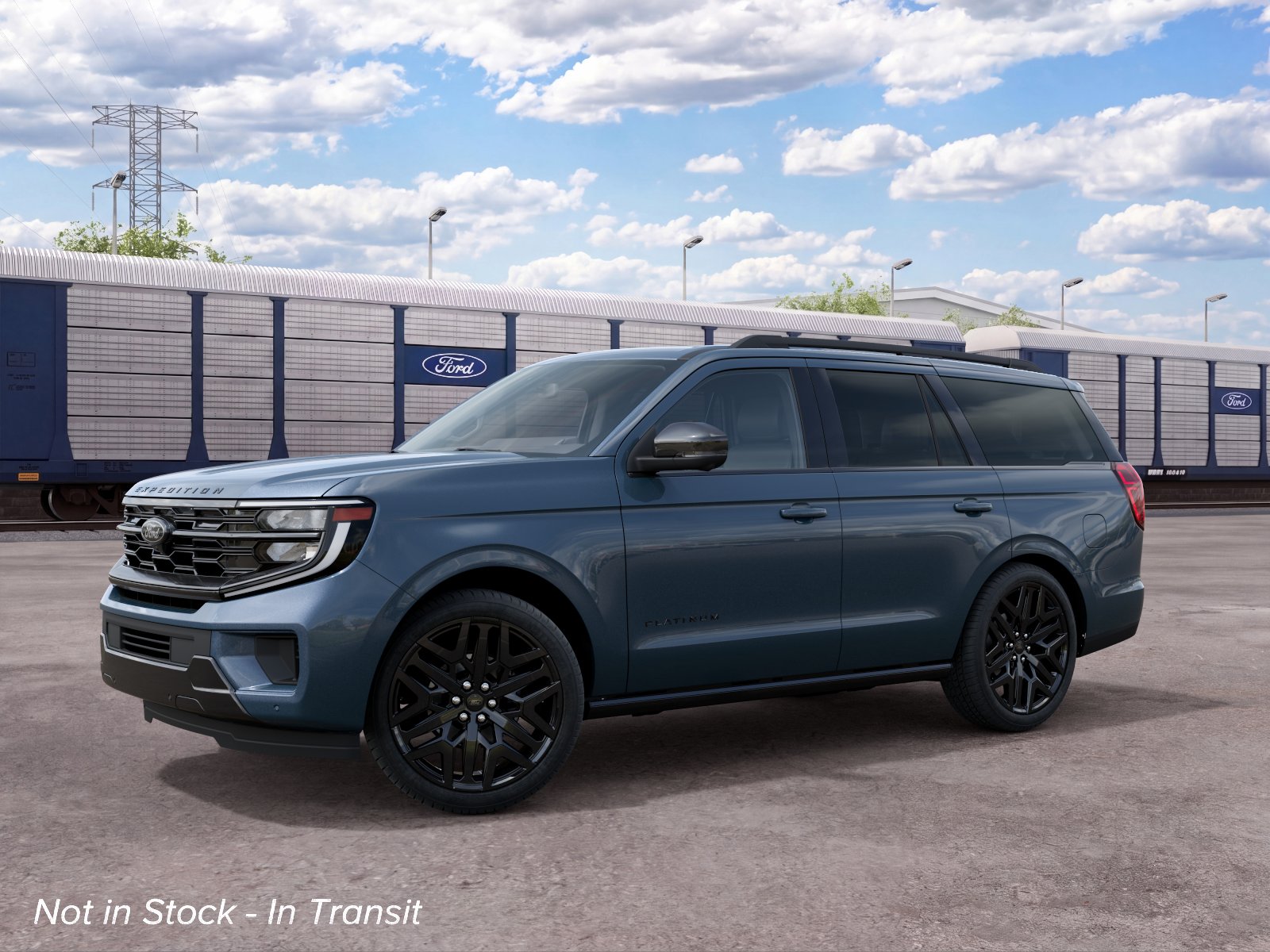
The Expedition lineup runs from purpose-built trail capability on one end to full luxury on the other, with several meaningful stopping points in between. Understanding which end of that spectrum aligns with your actual priorities makes the trim selection much easier than starting with the middle and working outward. The Timberline and the Platinum are the clearest expressions of the lineup's range — they're genuinely different vehicles in character and intended use, built around buyer profiles that share the need for full-size capacity but not much else.
The Timberline is the choice for buyers who plan to take the Expedition off paved roads with purpose rather than by accident. A raised suspension, all-terrain tires, underbody skid plate protection, and trail-specific hardware give it access to forest service roads, hunt camp tracks, and unimproved terrain that standard Expedition trims weren't designed for. The Timberline's capability profile is different from the Bronco's — it's built to carry a full family load to a remote campsite rather than to navigate rock gardens — but it opens terrain that no standard full-size SUV can access. The XLT and Limited handle the practical middle ground where most buyers land: well-equipped, fully capable for towing and family hauling, and honest about value without padding the price for content that won't get used.
- Timberline: raised suspension, all-terrain tires, and skid plates for buyers who need full-size capacity on unpaved terrain
- Limited: the practical intersection of interior quality, technology content, and towing capability without full luxury pricing
- Platinum and King Ranch: premium leather seating, available massaging seats, and a refined interior experience that competes with luxury brand full-size SUVs
The King Ranch occupies the same feature tier as the Platinum but delivers a distinct character — genuine leather seating with contrasting stitching, Western-themed badging, and an interior presentation that's identifiable from the moment the door opens. It draws a specific buyer who wants the Expedition's full capability wrapped in that aesthetic, and it holds that character consistently throughout the cabin rather than as a surface treatment. The Stealth Edition applies a blacked-out appearance package across exterior elements — grille, badges, trim pieces — for buyers who want the Expedition's full capability with a more understated visual presence.
The Expedition lineup's breadth — trail-ready Timberline through Platinum-level luxury — means there's a version of this vehicle that fits most buyer profiles that have concluded a full-size SUV is the right answer for their household. The question is which version aligns with your specific combination of utility, comfort, and capability requirements, and that's a conversation our team at Eau Claire Ford is well-positioned to help you work through honestly.
Browse Eau Claire Ford's current Expedition inventory online to see what's available in both standard and MAX configurations across the full trim range, get a read on what your current vehicle is worth as a trade, or reach out to our team in Eau Claire, WI — we'll help you find the Expedition that fits your household's actual demands without overcomplicating a decision that should ultimately be straightforward.